
The “end of AIDS” in 2030…with the objectives of “zero transmission” and “zero discrimination”!

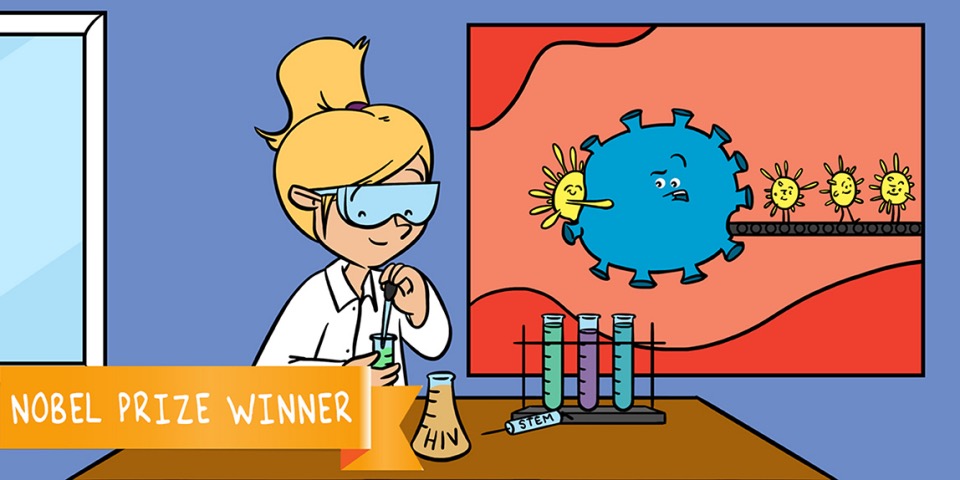
Professor Françoise Barré-Sinoussi won the Nobel Prize in Physiology or Medicine in 2008 (jointly with Luc Montagnier) for the discovery of human immunodeficiency virus (HIV).
HIV (human immunodeficiency virus) is a virus that attacks the cells that help the body fight infection, making a person more vulnerable to other infections and diseases. The first description and identification of HIV by the Institut Pasteur’s teams was published in the Science Journal on May 20, 1983. It will be renamed HIV in 1986, or Human Immunodeficiency Virus. The revelation of a retrovirus will gradually change the beliefs around this disease. This discovery will also bring patients and researchers together around one of the greatest contemporary challenges in human health.
Now after 40 years,there is still no cure for HIV/AIDS, and there is also no vaccine that prevents HIV infection. Therefore, people living with HIV are chronic carriers of the virus and they need to take medications every day of their lives. The medical treatment for HIV is called antiretroviral therapy (ART), which consists of chemicals that limit the ability of HIV to reproduce, therefore maintaining low amounts of the virus in the body. ART therapies have contributed to the significant decrease in AIDS-related deaths. Additionally, lifelong ART therapy has several limitations such as the possibility of developing drug resistance (meaning the therapy becomes less effective with time), side effects that can accumulate with time, and a high cost that places an impossible financial burden on patients with limited resources.
Apart from the ART therapies that are used worldwide, there are other new treatments that have great potential to become cures in the future. One promising direction is called stem-cell transplant, in which stem cells Immature cells that can become most other cell types, like muscle cells, brain cells, liver cells, etc. are injected into the patient’s body to help re-grow their immune cells. In 2025, top 10 global research innovations in the HIV field have delivered a weightening report: vaccines have transformed from “stars in the laboratory” to “flames in the human body”, long-acting drugs have changed from “clinical trials” to “hope in patients’ pockets”, and cure research has evolved from “miracle cases” to “quantifiable targeted targets”.
The following list outlines the most impactful research achievements.
1. mRNA Vector Vaccine Promotes Early Maturation of Broadly Neutralizing Antibody Precursors;
2.mRNA-LNP Delivering Membrane-Anchored HIV Env Trimer Shows Superior Neutralizing Antibody Induction;
3.Multi-Omics Single-Cell Analysis Reveals Key Regulators of HIV-1 Persistence in Early Infection;
4.Single-Cell Analysis Links Monocyte IL1B Expression to Reservoir Size in Acute Infection;
5.Bispecific TCR Molecule Shows Promise for Targeting and Clearing HIV-Infected Cells;
6.The Seventh Reported Case of HIV Cure Provides a Replicable Path;
7.Advancements in Long-Acting HIV Prevention and Treatment;
8.Refined Understanding of Reservoir Dynamics and Latency Reversal;
9.Innovations in Therapeutic Vaccine Design;
10.Integration of Advanced Delivery Systems and Gene Editing.
Meanwhile, the knowledge on HIV has also been useful in the fight against SARS-CoV-2 and Monkeypox: diagnostic tools, techniques for analyzing and manufacturing broad-spectrum antibodies. Françoise Barré-Sinoussi believes that by providing reliable information to individuals living with HIV/AIDS and educating all of society about the virus, we will succeed in reducing further its prevalence and mortality worldwide. And we will eventually achieve that the goal of “zero HIV deaths by 2030” is part of international strategies (UNAIDS, Unicef and WHO) to achieve the “end of AIDS”, with the objectives of “zero transmission” and “zero discrimination”.