
Adapting the 14-day rule for embryo research to encompass evolving technologies from Human in vitro fertilisation and developmental biology
Martin Johnson, professor of reproductive sciences at Cambridge, Reviewed a scientific and social revolution: Human in vitro fertilisation and developmental biology.

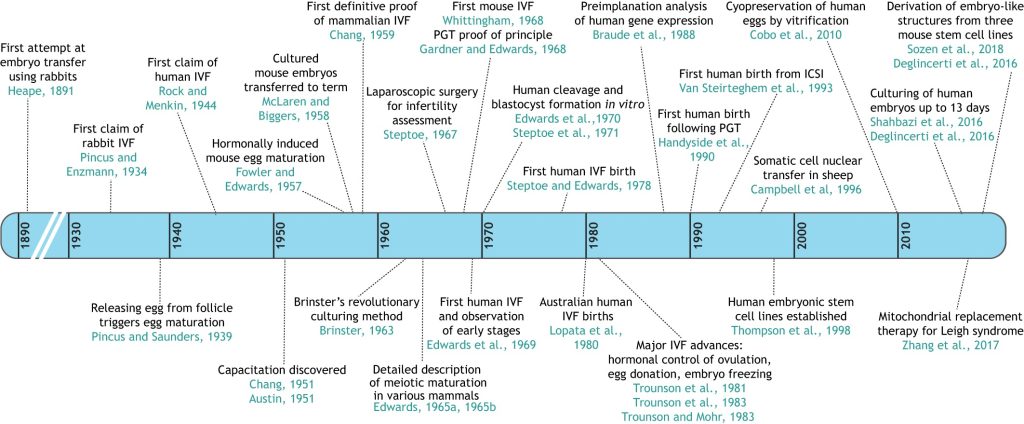
In vitro fertilisation is defined as the fertilisation of an egg by a spermatozoon outside the body. Human IVF was first achieved in 1969 by Robert Edwards and his colleagues. Edwards was awarded the 2010 Nobel Prize for Physiology and Medicine ‘for the development of in vitro fertilisation. Edwards’ early research programme led to two technologies that changed the face of human reproduction: IVF and PGT. Indeed, Edwards’ team and partnership got the ultimate and final proof of their successful attempts at IVF in 1978 and 1979. Martin Johnson as a member of Edwards’ partnerships mainly participated in the early research and optimization of IVF technology, containing some key aspects such as embryo culture and exploration of fertilization mechanisms. Johnson also assisted in writing extensively about the ethics of assisted reproduction, providing academic support for establishing an ethical framework in this field and promoting the development of global reproductive medicine.
Increasingly, facts have proven that IVF has become so normalised compared with the early days。As Edwards points out, the role of basic science and the scientist is pivotal in the development of IVF. And European Society for Human Reproduction and Embryology had the specification of embryology in its name, and that the Society’s constitution mandates a key role for scientists. These will continue to serve the incidence and causes of infertility, and reproductive sciences.